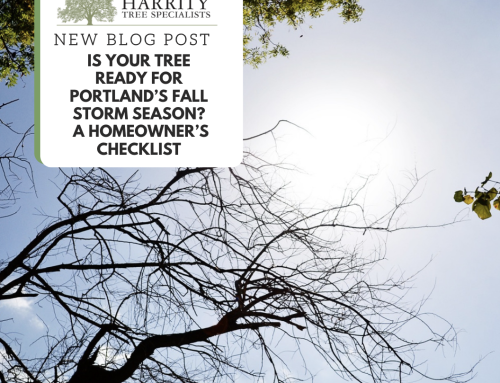
As the leaves start to turn and temperatures begin to drop, it’s easy to assume tree care season is winding down. In reality, fall is one of the most important times of year to give your trees attention. The physiological changes trees undergo as they prepare for dormancy — slowing growth above ground while roots continue developing below — make autumn a critical window for maintenance. The choices homeowners make now can determine how well their trees survive winter storms, freezing temperatures, and moisture loss, and how strong they come back in spring.
At Harrity Tree Specialists, our ISA Certified Arborists have spent decades helping Portland-area homeowners get ahead of storm damage, disease, and seasonal stress before cold weather sets in. Since 1992, our team has combined TRAQ (Tree Risk Assessment Qualified) training with hands-on plant health care to keep local landscapes safe through every season. Here’s what we recommend as you prepare your property for winter.

1. Schedule a Fall Tree Inspection
Cooler weather and thinning canopies make it far easier to spot problems that dense summer foliage can hide, including cracked limbs, cavities, girdling roots, early signs of decay, or pest infestations working their way through bark and branches. A professional site analysis now can catch structural weaknesses before winter storms and heavy snow loads turn a small defect into a hazardous limb failure or full tree loss. Trained arborists look for warning signs that most homeowners miss entirely, such as included bark, fungal conks at the base, or lean that has developed gradually over several seasons.
2. Prune Dead or Weak Branches
Fall pruning removes dead, damaged, or diseased wood before ice and snow accumulation put additional stress on limbs already compromised by decay or poor structure. According to the International Society of Arboriculture, proper pruning should always be done with a clear purpose — removing hazardous wood, improving structure, or increasing clearance — using clean cuts made just outside the branch collar so the tree can heal efficiently. Improper pruning technique can cause long-term damage and actually increase a tree’s vulnerability, which is why the ISA recommends hiring a certified professional for any pruning that requires power equipment or climbing. Our pruning services follow these ANSI A300 industry standards on every job, whether we’re thinning a canopy for airflow or removing a single hazardous limb.
3. Deep Root Watering
Even as visible growth slows, tree roots continue developing well into fall and require consistent moisture to build up reserves before the ground freezes. The Arbor Day Foundation notes that soil which stays moist through autumn also stays warmer, helping keep root cells turgid and better protected from winter cold damage. As a general guideline, deep, slow watering that soaks the top 12 inches of soil is far more effective than frequent shallow watering, which can encourage roots to stay near the surface where they’re more exposed to freeze damage. This is especially critical for trees planted within the last one to three years, since their root systems haven’t yet established the depth and spread needed to access moisture on their own.
4. Mulch Around the Base
A 2–3 inch layer of organic mulch spread in a ring around the root zone — kept a few inches back from the trunk to avoid trapping moisture against the bark — insulates roots from sharp temperature swings, retains soil moisture through dry spells, and suppresses weeds that compete for nutrients. Avoid piling mulch directly against the trunk (sometimes called “volcano mulching”), which traps moisture against the bark and can invite rot, insects, and disease. Properly applied, mulch also improves soil structure over time as it breaks down, feeding the microbial activity that supports healthy root development.

5. Watch for Pest and Disease
Warning Signs
Many pests and fungal pathogens become far more visible in fall, once leaf drop and cooler weather reveal cankers, discoloration, dieback, or insect activity that summer canopy growth had concealed. Catching an infestation or disease now, rather than waiting until spring symptoms worsen, gives our plant health care team a much better chance of treating the problem before it spreads to neighboring trees or causes irreversible structural damage. Early diagnosis is especially important for high-risk species in the Pacific Northwest, where wet, mild winters can allow certain fungal issues to progress steadily even during dormancy.
6. Remove Storm-Risk Trees or Limbs
If a tree shows structural issues, significant lean, large sections of dead wood, or root damage, fall is the ideal time to schedule removal before winter winds and ice loads increase the risk of it coming down unexpectedly. The Pacific Northwest sees its share of fall and winter windstorms, and a compromised tree near a home, driveway, or power line becomes significantly more dangerous once saturated soil and heavy limbs are added to the equation. Our arborists assess risk using industry-recognized TRAQ methodology, so recommendations are based on documented structural and site conditions, not guesswork.
7. Plan for Spring Now
Fall is actually one of the best times to plant new trees. Cooler air combined with soil that’s still warm from summer helps roots establish before winter dormancy, without the heat stress that comes with spring or summer planting. If you’re considering adding to your landscape, whether for shade, privacy, or property value, now is the time to start that conversation so planting can happen while conditions are optimal.
Why Fall Care Matters
Trees that go into winter healthy, properly pruned, and free of hidden structural hazards are far more likely to survive severe weather and come back strong in spring. Skipping fall maintenance often means bigger problems, and bigger costs, down the road: storm damage, spreading disease, or the loss of a mature tree that took decades to grow. Whether you’re a homeowner protecting a backyard shade tree or a property manager overseeing a commercial landscape, proactive fall care is one of the most cost-effective investments you can make in your trees’ long-term health.
Ready to get your trees winter-ready? Contact Harrity Tree Specialists today for a fall inspection and personalized care plan, or explore our commercial tree services if you’re managing a larger property.