Portland’s mild, wet winters and dry summers shape how and when trees should be pruned. Timing matters: the right cut at the right time supports structure, reduces storm risk, and keeps trees healthy. The wrong cut—or pruning at the wrong season—can stress a tree, invite pests, or create weak regrowth.
Here’s a practical guide for Portland homeowners on when it is time to get trees trimmed.
Best Time to Prune Most Portland Trees
For most deciduous trees, late winter into early spring (roughly December through March) is the preferred window. Trees are dormant, leaves are off so structure is easier to see, and cuts close more cleanly once growth resumes. Portland Parks & Recreation Urban Forestry notes that this period is generally less stressful for trees and carries lower disease and insect pressure. Guidance on proper pruning methods is available on the City’s How to Prune Properly page and the broader resources at portland.gov/trees.
Dead, broken, or hanging branches can and should be removed any time of year for safety. Limited light pruning is acceptable in summer for many species, but heavy canopy removal during the growing season can slow growth because it removes leaf surface the tree is using to manufacture food.
Species-Specific Timing Notes
Not every tree follows the same calendar:
- Most deciduous shade trees (oaks, many maples, fruit trees): Late winter / early spring dormant season.
- Bigleaf maples and birches: These can bleed heavily if pruned in late winter. Light work is often better in mid-to-late summer once sap pressure drops.
- Flowering trees (cherries, dogwoods, magnolias): Prune shortly after bloom so you do not remove next year’s flower buds.
- Conifers (Douglas fir, western redcedar): Generally need less frequent pruning. Remove dead or hazardous wood any time; structural work is best before the spring growth flush.
- Young trees: Early structural pruning in the first several years establishes a strong central leader and good branch spacing. The City offers specific guidance on pruning young trees at portland.gov/trees.
The International Society of Arboriculture (ISA) promotes Best Management Practices that emphasize proper cuts, appropriate timing, and avoiding harmful techniques such as topping.
Signs It Is Time to Trim
Look for these indicators that a tree needs attention:
- Dead, dying, or hanging limbs (“widow makers”)
- Branches rubbing or crossing
- Limbs growing into the house, roof, power lines, or sidewalks
- Dense canopy that blocks light or holds excess moisture
- Visible cracks, splits, or included bark at major unions
- Recent storm damage or lean
- Clearance needs for streets, sidewalks, or driveways (especially relevant for street trees)
- Fungal growth, dieback, or other signs of decline
Street trees in the public right-of-way usually require a permit for pruning beyond the smallest branches. Details are on the City’s street tree pruning pages linked from portland.gov/trees.
When to Call a Professional
Small, low branches on young trees can sometimes be handled by a homeowner with the right tools and knowledge. Larger trees, work near structures or utilities, risk assessment, or any street tree almost always benefit from an ISA Certified Arborist. Certified arborists are trained in tree biology, proper pruning standards (including ANSI A300), and safety practices. You can verify credentials through the ISA directory.
Helpful Videos on Pruning Timing and Technique
These resources show practical examples and credential verification:
- Tips for Searching the Find an Arborist Directory — How to verify ISA credentials
- Pruning Young Shade Trees — Structural pruning fundamentals for long-term health
- Pruning Ornamental Trees & Shrubs with OSU Master Gardeners — Regional techniques and timing considerations
Professional Tree Trimming in Portland
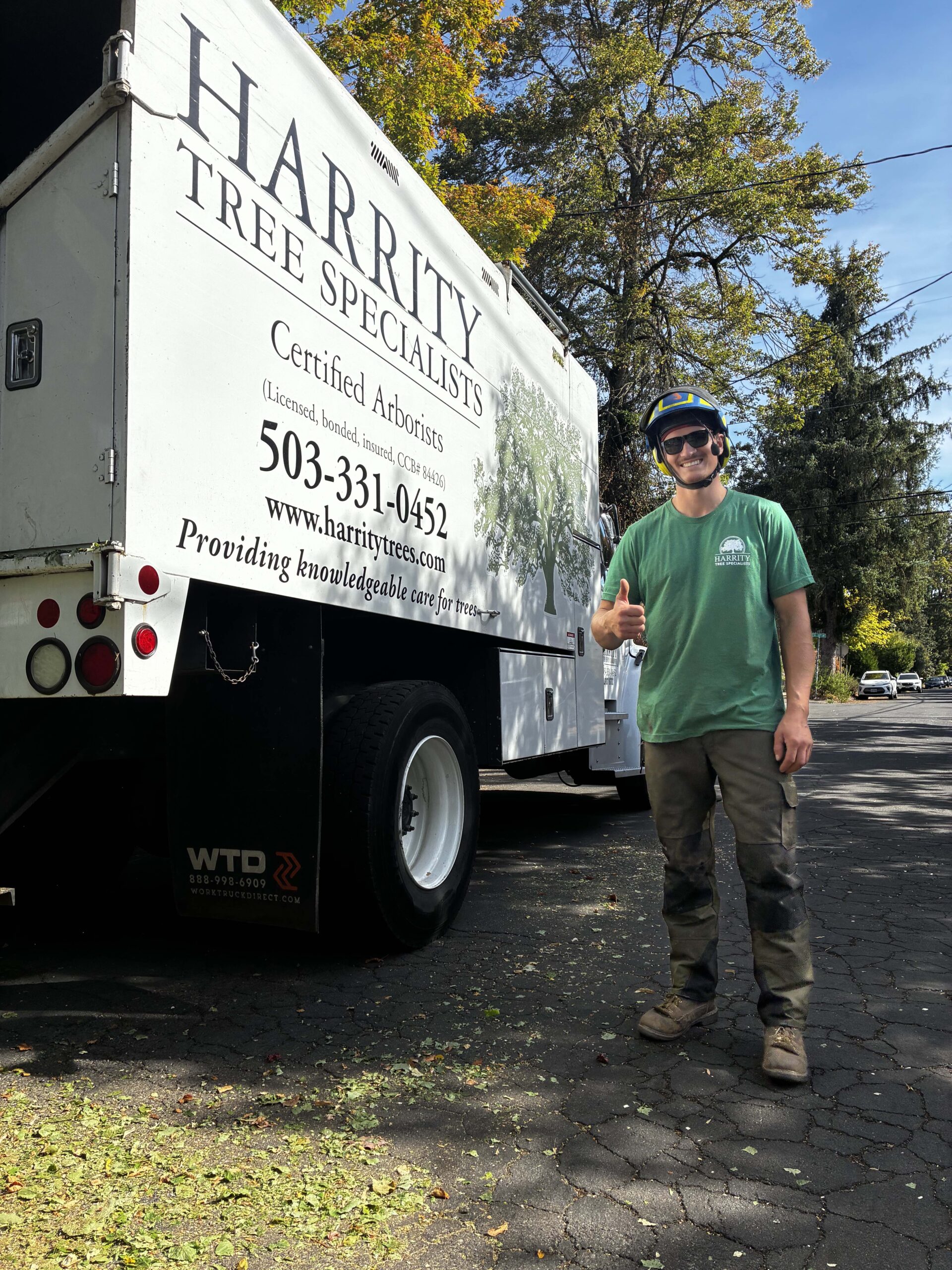
At Harrity Tree Specialists, Joe and Becky Harrity have owned and operated this family business for over 30 years. Our ISA Certified Arborists provide pruning, risk assessment, and plant health care across the Portland metro area. We follow industry standards, communicate clearly, and respect both trees and property. Learn more about residential services on the Residential Tree Care page or read about our background on the About Us page.
Ready to Schedule Trimming?
The right time to trim is when a tree shows structural, safety, or clearance needs—or when the seasonal window is open for the species you have. Waiting too long increases risk and can make the work more difficult.
Call or text Harrity Tree Specialists at (503) 331-0452 or visit harritytrees.com.
We’ll assess your trees, explain the best timing and options, and provide a clear recommendation for your Portland property.